Showing posts with label winter. Show all posts

Friday, December 25, 2020

Merry Christmas from Jolly's Ranch!


9" x 12" Oil on Panel
Down the valley from where I live is a canyon in the Wasatch Range I've visited a lot this year. A few miles up the canyon is a city park that, I presume, used to be a ranch. I've driven past that park many times on my way to higher altitudes, each time thinking I should stop and paint there some time. Yesterday, Christmas Eve, was finally that time.

One nice thing about painting in winter: no bugs in your painting!

MERRY CHRISTMAS!

Sunday, May 19, 2019

Last of Winter

This post squeezes four separate hikes, all in the same canyon, into one post. 

The snow is gone from the lower slopes and washes in the Wasatch Mountains, but quite a bit remains higher up. You might think that as winter changes to spring and moves on into summer that all would return to just the way things were the summer before. However, common to these mountains, a little bit of geological rearranging frequently occurs over the colder months. I've seen it as it has happened on occasion. For instance, this five foot wide boulder wasn't here in the trail last year:


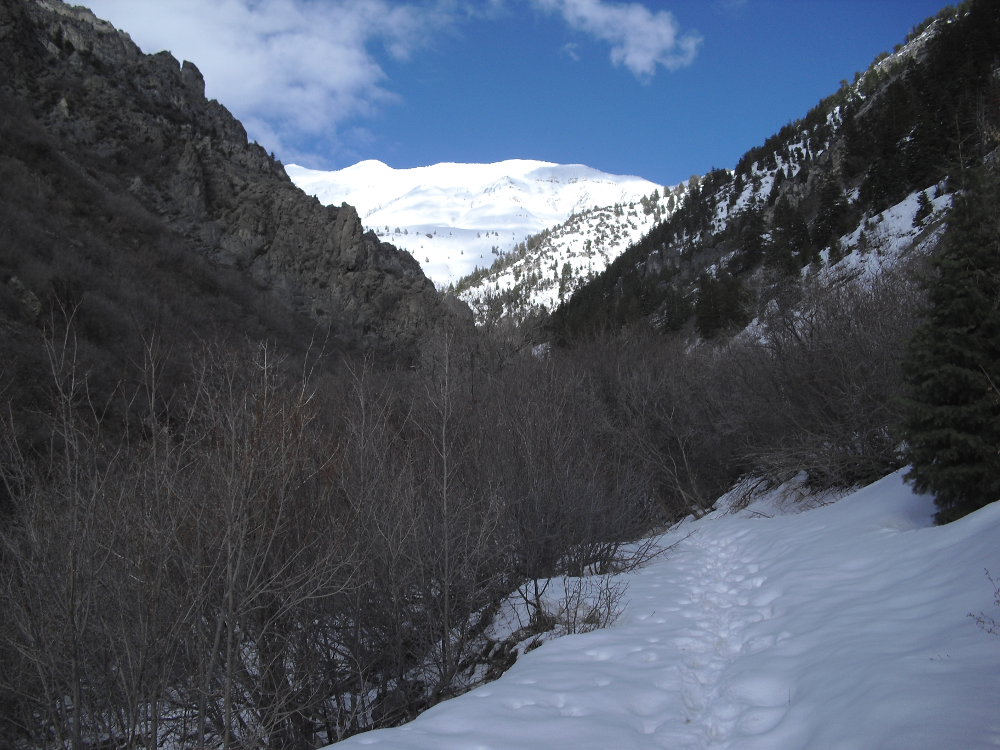
This hike took place April thirteenth of this year, in one of my favorite canyons in the Wasatch range. Higher up the trail, the hike eventually became over snow. That's the way hikes go this time of year. Passing clouds put me in shadow sometimes, but some part of the landscape was always sunlit.


Every once in a while I stop to take a selfie, enjoying the outdoors as always.


I hiked as far up the trail as I could before postholing in deep snow became a problem. Then it was time to return. 

In and out of sunlight and shadow, the section of trail shown below was illuminated as I returned down canyon.


___________________

A week later I was back up the same trail. The weather forecast that day called for a chance of rain. It was a chance I was willing to take. There was, of course, less snow on the trail. An avalanche tongue I've hiked across each time I've come up the canyon had shrunk considerably and was showing more of the debris it had brought down the mountainside earlier in the year.


Here's a view back down canyon from the receding avalanche tongue:


Dark storm clouds moved over the canyon, and an occasional clap of thunder echoed off of the canyon walls.


I didn't want to stay up that high if lightning became a concern, or if heavy rain became a possibility, turning the yet deep snow into a messy slush. As raindrops began, I donned my rain gear and headed back down the trail.


____________________

On a very pleasant day late in April I was back up the canyon. There was, of course, less snow this time. The avalanche tongue had shrunk even more since the last time I visited.


In fact, snow had receded off of most of the rocky trail that had been covered by the avalanche earlier in the year. Standing on the trail below the avalanche tongue, I observed how smaller trees which had survived the avalanche had become visible again as the snowpack had shrunken here. Judging from those small trees, and how they had revealed themselves incrementally over the past weeks, I was able to see that the trail where I was standing had been buried under about eight feet of snow when I was up here earlier this year.


There were still large patches of snow in the canyon, but it was such a pleasant day for a hike. I had packed a jacket in my day pack, but it was such a shirt sleeve kind of day, I never needed it.


One more look up canyon as I headed back down late in the day:


____________________

Early May saw me up the canyon once again. Down in the valley trees are well on their way to being fully leafed out. Not so up in the higher elevations, where trees are just beginning to bud. There was, however, much less snow than the week before. The avalanche tongue was growing thinner by the week.


The day had started out with very nice weather, but as it grew later in the day and I climbed higher, scattered storm cells began to form and pass over the mountains. None of the storm cells hit me directly, but I did get a little sprinkling of rain as one passed near. It wasn't enough to make me change my plans though. With less snow I was able to hike farther up the canyon, up into the elevation where aspen trees grow.


Not everything up here has the drab greyness of late winter. I took the right fork at the top of the trail and hiked to a nearby meadow. There I found large patches of bright yellow glacier lilies beginning to come into full bloom:


The meadow was mostly free of snow, though large patches still surrounded it.


This meadow is a good place to stop and rest. I planned to stay there a little while that day, so I built a fire of rocky mountain maple wood and cooked myself something to eat.


Apple cinnamon oatmeal, along with an outdoors-appropriate pot holder ;)


Here's the view I had to the south of the meadow:


There was plenty of moose sign in the area, but I saw no moose that day. To the north my view was of a mountain that rises nine thousand feet above sea level. As the sun moved toward the western horizon, shadows cast by mountains west of me began to creep up the sides of mountains to my east.


After dinner (which besides oatmeal, also included some whole grain fig bars), I cleaned the pan with snow and heaped a pile of snow on the dying fire to make sure it was out. Then I hiked the short distance back to the fork in the trail, and went up the left fork to a meadow I call "Moose Meadow". From there I had a great view of a mountain to the east, one that rises over eleven thousand feet high.


As I began my hike back down, I met a man who had decided, just on the spur of the moment, to hike up the canyon that day. He told me he was sixty seven years old, had always lived in the area, and was recovering from months of cancer treatment. We hiked back down together, telling each other our experiences in the canyon, and about animals we've met there. We saw a couple mule deer as we descended the trail. I dearly hope that when I'm 67, I'm still hiking in the mountains. Is 77 too much to ask?

Tuesday, March 26, 2019

Wasatch Canyon Hike

Prints of Boots, Snowshoes and Skis.
A week and a half ago I grabbed my day pack and a water bottle and headed up a canyon not far from my home. Most of the hike was over snow, some of it pretty deep, but you could hardly call it a winter hike. Temperatures were rather mild. I packed an extra coat with me just in case, but never needed to put it on.

A Snow Covered Avalanche Tongue?
A few people had hiked up before me, the most prepared ones on snowshoes or skis. My own snowshoes were left at home. My plan was to hike up as far as the snow allowed me, then turn around and hike back. For the most part, the snow's surface was firm enough for me to walk over.


A little more than two miles up canyon I began post holing. The snow had softened to the point where It would no longer support me. It can be challenging trying to pull your leg out from deep snow when the rest of you is still up on top of the snow. Time to return.

It's so good to be outdoors, walking in the mountains! The return hike was made during the golden hour, when the low sun paints the landscape in warm tones. All in all, a very pleasant hike.


Thursday, January 31, 2019

A Winter Walk


It's cold outside. There's snow on the ground. There's the threat of avalanches in the mountains and the freeze-thaw effect causing occasional rockfalls. But it's a beautiful, sunny day outside. Time to go for a walk in one of my favorite Wasatch Mountain canyons!

Of course I'll hike carefully. The walk will likely be less than two miles up the canyon, and then back. This hike won't go near the avalanche-prone higher slopes, and I'll stay alert for anything the cliffs and slopes might toss down at me.


My hike started in the afternoon, after finishing a few tasks in town. The snow sparkled wherever the low winter sun's rays could reach the bottom of the canyon. The sky was so blue. The high mountain ridges and cliffs were, as usual, spectacular.


Not all, however, on this trip was pleasant and enjoyable. There's a little trail which cuts off from the main trail and goes for a quarter mile or so before rejoining the main trail. It's a narrow trail, and not much used, but nicer than the section of main trail it bypasses. I always take this trail on my way up the canyon. On this particular day on that trail I saw only one set of boot prints other than mine in the snow. About halfway up the trail, though, I came across an unexpected and unpleasant obstacle. There was a dead moose right on the trail. Not only was the moose dead, it had been heavily scavenged, and subsequently spread over more of the narrow trail. The snow around the moose corpse was packed down with paw prints of coyotes and/or foxes. Traces of blood were still visible on the snow. This part of the trail is a little steep, and passes through thick oak brush. That made getting around the massive carrion a little challenging, but soon enough I was able to continue up canyon.


No other unpleasant surprises awaited me that day. The rest of the hike was simply a walk in the Wasatch mountains on a glorious winter's day. Small birds, such as black-capped chickadees foraged among bare twigs and branches of Gambel oak and rocky mountain maple trees. High up among towering cliffs two eagles soared. I had no goals on this hike; no peaks to bag, no circuit to complete, no particular spot to arrive at. I had no interest on this hike other than to just be out in the wild, and that I was.


I walked the canyon for the rest of the afternoon, often pausing to look, listen, and generally absorb the experience as much as I could. Early evening I returned back down the canyon. On the way to the trailhead, I got to enjoy a nice end-of-day treat. There were enough clouds far to the west for the setting sun to shine and reflect through. It made for a small, but enjoyable sunset.


Saturday, January 19, 2019

The Second Week of 2019

12" x 9" Charcoal on Grey Paper
Here's two more charcoal portraits drawn from life at the weekly portrait sessions. The first one was drawn at Casey Child's studio, and the second one at Howard Lyon's studio.

12" x 9" Charcoal on Grey Paper
January is not one of my favorite months. The cold, grey, dreary winter days that beset this time of year don't provide much encouragement for painting outdoors. Especially when low clouds, rain, snow, haze and fog severely limit what you can see outdoors, anyway. The leaden grayness of these days could provide opportunity to use the "Torrit Grey" oil paint I was given a few years ago, but I certainly haven't wanted to, yet. 

So I find the drab winter months an excellent time to practice drawing and painting people from life at the open portrait sessions. That's important to honing one's skills and staying sharp. It's also something I immensely enjoy doing.

For more about portrait sessions, go to "Labels" on the side bar and click on "portrait", "sketching" or "drawing".

Saturday, December 22, 2018

Merry Christmas 2018

10" x 8" Oil on Panel
As often as I can, I attend painting and drawing sessions at other artist's studios. A week or so ago, one of the studios had none other than ol' Kris Kringle himself sitting for us to paint! Of course, instead of using charcoal, I had to break out the oil paints. As usual for my portrait oils, I used only four colors, almost a pure "Zorn palette": titanium white, yellow ochre, cadmium red (instead of vermilion) and ivory black. My little oil study of Santa is shown above.

Saint Nick is a fun subject to paint, and far easier than painting an entire nativity scene on portrait night. Of course the real reason for Christmas is expressed in the following video:


Merry Christmas everybody!

Thursday, March 15, 2018

Up the Canyon

8" x 10" Oil on Panel
Last Saturday was the nicest day yet this year, so I took an 8" x 10" pochade box for a short hike up a local canyon. A side trail led to this overlook, and that's where I set up and painted. There's still a little snow around the lower slopes, but I think it won't hang around much longer. There will likely still be a spring flurry or two, or three, but those kinds of things are only winter's last gasps. Spring is gaining momentum!

Another sign of spring: There's a bug stuck to the painting near the upper left corner. In plein air painting jargon, we jokingly call that an "eagle." See it up there in the sky? It'll be easier to get off of the painting once the paint's dry. No harm done, except for the poor bug.

Thursday, January 25, 2018

Photos from a Winter Walk


Tuesday was a wonderful day for a walk in the country. Winter can be rather unpleasant around here, but not on this day! The sky was so blue. Temperatures weren't too cold. Blue shadows contrasted with warm sunlight, highlighting the sepia, ochre and umber colors of marsh grasses and brush. A narrow first quarter moon shown faintly over the Wasatch Mountains.


There's always a ready-to-go day pack in my car. Among other things that stay in that day pack is a cheap little camera. It's there ready for hikes or even when I go on shorter walks. Usually the camera stays in the pack, but occasionally I get it out. On this walk, the camera came out of the pack as soon as I saw the bald eagle. The eagle landed in a tree close by as I stood looking out over the wintry landscape. Upon landing, the eagle gave a short series of high pitched staccato cries. Quite attention getting!


Admittedly, this eagle photo is not much better than those pictures you see published of bigfoot or UFOs. My attempt to work closer for a better photograph of the eagle only managed to annoy it, and it spread it's impressive wings and departed. I wish I had a better camera with me on these walks and hikes, but unfortunately, after a camera of mine died in a dust storm in Southern Utah a few years ago, I'm leery of taking any of my better cameras with me on these trips. The cheep little $65 Casio worked well enough for the rest of these pictures, I believe.


There were a few smaller hawks around on that bright winter's day. A flock of juncos flitted about through the latticework of winter-bare tree branches and underbrush by the trail. A red-shafted flicker made itself known by it's distinctive "kyeer!" call.


There's still quite a bit of ice on the lake. The ice seems thin, though, and there appears to be open water out to the west.


Here's those same mountains, seen through a filter of cottonwood trees.


In the other direction, seen across open ranch land, are some of my favorite stomping grounds; the canyons and ridges of the Wasatch Mountains.


The day's walk comes to a close as I return to my car. Before driving away I take one more look at a cloud-haloed Mount Timpanogos.


Wednesday, January 10, 2018

New Years Day Plein Air Painting Revisited


This will be an attempt to show step-by-step the painting I made on New Years Day. I hope it will be informative in spite of it's shortcomings. I'm not a wizard with photography, so there's some inconsistency from one shot to the next. Editing photographs of paintings is another challenge. It seems that no matter how hard I work at editing photos, my best hope is to get the photo to look somewhat similar to the original painting. It never looks exactly the same. Sometimes I just take the photos over again. However, you cannot take in-progress photos over again. Also, the finished photographs of paintings will look different from program to program, and from one computer monitor to another. That being said, here's the pictures:

The first thing I do when beginning an on-location painting is tone the panel with a thinned mix of colors. The tone layer is then painted over without allowing it to dry. Since the tone layer is still wet, it mixes somewhat with the next layers of paint, influencing them. Painting wet paint over wet paint also prevents the thinned tone layer from drying into a weak layer.


Using the same color mix as the tone, the composition develops and the darks begin to be worked out.


In the next photo, the darks are established further, and some color begins to be added.


As more color is added, the painting progresses from dark colors to light colors.


Admittedly, more happened in between the last photo and the next picture than is shown here, but I got caught up in paining and forgot to keep shooting pics. The next picture shows the development of distant clouds, and texture in the trees, brush, and marsh grasses.


The next picture shows further development of all parts of the painting, depending on where I think work is needed. 


A few more touch-ups, and the painting is signed and finally finished! 


The last picture shown was photographed with a different camera than the rest of the pictures in this post. I was unhappy with the quality I got with the old little cheapie Casio camera used for the other pictures, so the finished work was rephotographed with a better camera. I'm still not entirely pleased with the photograph, but I'm happy to have the opportunity to show these in-progress pictures to you. I hope that this series of pictures, along with the brief descriptions accompanying them, will give you some insight into the workings of some of the plein air paintings that come from my pochade boxes or easels. Thanks for Reading!