Showing posts with label wildflowers. Show all posts

Sunday, May 19, 2019

Last of Winter

This post squeezes four separate hikes, all in the same canyon, into one post. 

The snow is gone from the lower slopes and washes in the Wasatch Mountains, but quite a bit remains higher up. You might think that as winter changes to spring and moves on into summer that all would return to just the way things were the summer before. However, common to these mountains, a little bit of geological rearranging frequently occurs over the colder months. I've seen it as it has happened on occasion. For instance, this five foot wide boulder wasn't here in the trail last year:


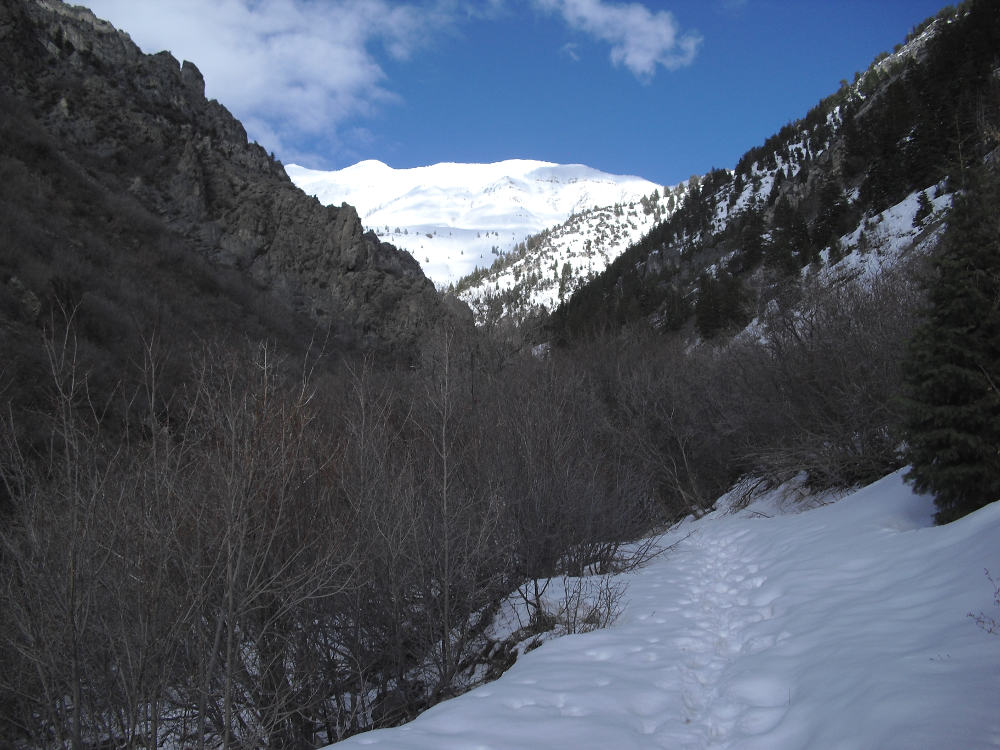
This hike took place April thirteenth of this year, in one of my favorite canyons in the Wasatch range. Higher up the trail, the hike eventually became over snow. That's the way hikes go this time of year. Passing clouds put me in shadow sometimes, but some part of the landscape was always sunlit.

Every once in a while I stop to take a selfie, enjoying the outdoors as always.


I hiked as far up the trail as I could before postholing in deep snow became a problem. Then it was time to return. 

In and out of sunlight and shadow, the section of trail shown below was illuminated as I returned down canyon.


___________________

A week later I was back up the same trail. The weather forecast that day called for a chance of rain. It was a chance I was willing to take. There was, of course, less snow on the trail. An avalanche tongue I've hiked across each time I've come up the canyon had shrunk considerably and was showing more of the debris it had brought down the mountainside earlier in the year.


Here's a view back down canyon from the receding avalanche tongue:


Dark storm clouds moved over the canyon, and an occasional clap of thunder echoed off of the canyon walls.


I didn't want to stay up that high if lightning became a concern, or if heavy rain became a possibility, turning the yet deep snow into a messy slush. As raindrops began, I donned my rain gear and headed back down the trail.


____________________

On a very pleasant day late in April I was back up the canyon. There was, of course, less snow this time. The avalanche tongue had shrunk even more since the last time I visited.


In fact, snow had receded off of most of the rocky trail that had been covered by the avalanche earlier in the year. Standing on the trail below the avalanche tongue, I observed how smaller trees which had survived the avalanche had become visible again as the snowpack had shrunken here. Judging from those small trees, and how they had revealed themselves incrementally over the past weeks, I was able to see that the trail where I was standing had been buried under about eight feet of snow when I was up here earlier this year.


There were still large patches of snow in the canyon, but it was such a pleasant day for a hike. I had packed a jacket in my day pack, but it was such a shirt sleeve kind of day, I never needed it.


One more look up canyon as I headed back down late in the day:


____________________

Early May saw me up the canyon once again. Down in the valley trees are well on their way to being fully leafed out. Not so up in the higher elevations, where trees are just beginning to bud. There was, however, much less snow than the week before. The avalanche tongue was growing thinner by the week.


The day had started out with very nice weather, but as it grew later in the day and I climbed higher, scattered storm cells began to form and pass over the mountains. None of the storm cells hit me directly, but I did get a little sprinkling of rain as one passed near. It wasn't enough to make me change my plans though. With less snow I was able to hike farther up the canyon, up into the elevation where aspen trees grow.


Not everything up here has the drab greyness of late winter. I took the right fork at the top of the trail and hiked to a nearby meadow. There I found large patches of bright yellow glacier lilies beginning to come into full bloom:


The meadow was mostly free of snow, though large patches still surrounded it.


This meadow is a good place to stop and rest. I planned to stay there a little while that day, so I built a fire of rocky mountain maple wood and cooked myself something to eat.


Apple cinnamon oatmeal, along with an outdoors-appropriate pot holder ;)


Here's the view I had to the south of the meadow:


There was plenty of moose sign in the area, but I saw no moose that day. To the north my view was of a mountain that rises nine thousand feet above sea level. As the sun moved toward the western horizon, shadows cast by mountains west of me began to creep up the sides of mountains to my east.


After dinner (which besides oatmeal, also included some whole grain fig bars), I cleaned the pan with snow and heaped a pile of snow on the dying fire to make sure it was out. Then I hiked the short distance back to the fork in the trail, and went up the left fork to a meadow I call "Moose Meadow". From there I had a great view of a mountain to the east, one that rises over eleven thousand feet high.


As I began my hike back down, I met a man who had decided, just on the spur of the moment, to hike up the canyon that day. He told me he was sixty seven years old, had always lived in the area, and was recovering from months of cancer treatment. We hiked back down together, telling each other our experiences in the canyon, and about animals we've met there. We saw a couple mule deer as we descended the trail. I dearly hope that when I'm 67, I'm still hiking in the mountains. Is 77 too much to ask?

Thursday, July 5, 2018

First Hike of Summer 2018

Beginning the Hike
My hike started in the mouth of a canyon where the Rocky Mountains meet Basin and Range. The altitude of the trailhead is around 4700 feet above sea level. It was early afternoon, and the day was warm with mild breezes, and only a few small scattered clouds. Good hikes can be had in a many kinds of weather, but this was particularly good weather for a hike.

A Little Ways up the Trail
This is one of my favorite trails. It's the first mountain canyon I ever hiked in back in 1982 when I first visited this area. The canyon continues to provide good hiking experiences in all seasons. For more pictures of this canyon, you can visit this post from two years ago.

Roots
The lower end of the canyon is more desert-like than other parts of the trail. Every once in a while a small lizard or skink would dart across the trail ahead of me.

Looking Back
The character of the canyon changes as the trail gains altitude. Drier below, it becomes greener higher up. There's a noticeable temperature difference between the lower and upper parts of the trail.

Dense Greenery
Around halfway up the canyon rocky mountain maple and box elder trees crowd the trail. The close foliage can give the impression of being in a forest, but the deciduous thickets only line the narrow bottom of the canyon. Occasional views up through the canopy reveal mostly juniper, cliff rose, and towering evergreen trees standing singly or in scattered stands. Huge cliffs and outcrops dominate the canyon sides.

Looking South Toward Corral Mountain
I reach the top of the canyon trail and take the left fork, heading north. The trail winds through stands of maple trees, then aspen groves. The trail also passes through meadows, providing great views of the surrounding mountains. Summer breezes cause the aspen leaves to whisper and shimmer in the sunlight.

Provo Peak
This section of trail rises a thousand feet, from about 7200 feet to 8200 feet above sea level. I see a few deer scattered throughout this area, their red coats standing out against the forest greenery.

Yet Another Rubber Boa
Just below the 8200' pass I come across what looks like a huge earthworm on the dirt trail. It's a kind of snake called a rubber boa. I've yet to find anyone who knows what I'm talking about when I mention to them about rubber boas. Even avid outdoor hikers I know have never seen nor heard of them, yet I come across rubber boas almost regularly on my summer hikes, and in several of the local canyons. I've posted about them before on this blog. On this hike I gently pick up the rubber boa and move it off the trail lest some unobservant hiker come along and carelessly tread on the snake.

Cascade Mountain
At the pass I turn right onto another trail, heading east. Parts of the trail run through open country, providing great views of towering mountains. If majestic is a term that applies to mountains, how can it ever be applied to mortal kings and queens? I don't care how lavish their palaces, how fancy their carriages, or how dazzling their crowns, mere royalty doesn't measure up to the majesty of these mountains! Silly though it might seem, the grand scenery surrounding the trail occasionally caused me to whisper in awe, simply, "Oh, wow!"

Columbines
This segment of trail travels around the north side of a mountain and passes through large stands of tall evergreen trees. The trees provide cool shade to the forest floor. The understory is only about knee high or so, with abundant white columbine flowers scattered throughout. Red squirrels and woodpeckers are common in these woods.

Provo Peak
The trail crosses a stony ridge at about 8700 feet, and here I stop to eat and rest before heading back. Directly east of this overlook is a mountain which towers to over 11,000 feet in altitude. A gibbous moon rises above the ridge line. The air where I rest is mild, almost cool, and the sunlight feels pleasantly warm on my back.

A Snack Before the Hike Back
Next time I'll bring more food. The packaging on the fig bars I ate tout two servings per package, yet I was still hungry after eating all I had brought. The water bottle was filled with cold water from a spring a mile or so back down the trail, and was so refreshing. After a while it was time to return. A desire to stay tugged at me as I headed back. As I descended the trail, the air grew warmer even as the evening sky became darker. It was almost ten o'clock by the time I reached the trailhead.

Here's another post with pictures from this and another nearby canyon.

Friday, September 15, 2017

Random Pics from Random Hikes in the Wasatch Front 2017

Paintbrush
Hiking has always been a very important part of my life. Going on walks in the woods, mountains, desert - anyplace wild - is beneficial physically and mentally, and in so many other ways.
The Dry Lower Slopes of the Wasatch Front
Right next to town are the Wasatch Mountains. A few canyons cut deep into the mountains, and are convenient places to begin hikes. The photos in this blog post are from a few of the hikes I've taken this year. To view larger images, click on the pictures.


Near the Mouth of the Canyon
I don't always take photos while hiking. When I do, it's with a cheap little Casio camera that is usually with the gear in my day pack. I have better cameras at home, but it's the Casio that goes with me on trips. If the camera should be accidentally dropped, lost, or otherwise die, it wouldn't be too great an expense to replace it. All of the photos in this post were taken with that little $60 camera.


Water on the Trail
The spring runoff was pretty heavy this year. Fast moving water cut the usually dry canyon trail in several places. A springtime hike included a number of stream crossings while trying to keep my feet dry.

Closer View of the Water in the Previous Picture.
Thick vegetation covers some areas of the canyon bottom. Above that rise towering cliffs.


Wildlife commonly seen in the canyon include mule deer, bighorn sheep, and sometimes moose. I've seen elk sign in the canyon but have yet to see live elk.

Tiger Swallowtail Butterflies were common in the canyon this year.
Over halfway up the canyon trail you begin to get views of mountains rising above 11,000 feet in elevation.


Lizards are the most frequently seen reptiles in the canyon, but snakes are also often seen. I've met a number of rattlesnakes, and in spite of a couple alarming experiences we've always parted company peacefully. Also common are nonvenomous snakes; gopher snakes, racers, and - surprisingly - rubber boas.

It's not a giant earthworm -it's a rubber boa!
The upper end of the canyon opens up into meadows surrounded by evergreens and aspen trees, and wide open views.


Near one meadow I discovered a good sized aspen tree with very interesting claw marks on it. The claw marks were quite large. Similar marks were also found on a nearby tree. Could the marks have been made by a bear climbing the trees? The marks were rather old, but still encouraged vigilance on my part.


The claw marks go quite a ways up.
In another canyon later in the year I found this. It's not what I'd call pleasant accommodations. It looks like it should have trolls living in it. 


The top of this canyon also opens up into wonderful views of high mountains.


Provo Peak viewed from the north.
Imposing cliffs of Cascade Mountain.
The following photographs are a mix from a couple different canyons. Which canyons doesn't matter for my purposes here. I think this post will be about hiking and just being out in the wild more than it is about any particular place.


There are fascinating views of impressive mountain geology all around during these hikes, but there's much to see closer up, and on a smaller scale.

A Gnarly Rocky Mountain Maple Tree
Mud Wasp Nest?
High up on a cliff I saw this. Below the initials "LW" are reddish concentric circles and other marks. Are the reddish images ancient Indian rock art?


Among all the bigleaf raspberry plants I found one raspberry. I ate it.


Late summer wildflowers, including asters, growing by the trail in abundance.


Following are more views from Wasatch Range canyon hikes. The first one is a similar view to one shown earlier, but photographed later in the year, after most of the snow had melted.


Thanks for checking out my blog. Hope you liked it! Finally I'll leave you with this picture of me enjoying time spent in a Wasatch Mountain canyon.